
Services
What is Bunion Correction?
A bunion — known medically as hallux valgus — is a progressive deformity of the big toe joint in which the toe drifts towards the lesser toes and a bony prominence develops on the inner side of the foot. It is one of the most common foot conditions I treat, and for patients whose symptoms have not responded to conservative measures such as wider footwear or orthotic insoles, surgery can provide excellent and lasting correction.
I am increasingly offering minimally invasive surgery (MIS) for bunion correction to my private patients. This is a modern and technically advanced approach that achieves the same goals as traditional open surgery — realignment of the toe and removal of the bony prominence — but through very small incisions, with significant advantages in terms of recovery, scarring, and patient experience.


How Does it Compare to Traditional Open Surgery?
- Incisions of just 2–4mm — minimal scarring
- Less soft tissue disruption, reducing post-operative swelling and pain
- Able to walk in a post-operative shoe from day one in most cases
- Generally faster return to normal footwear and activity
- Reduced risk of wound complications and infection
- Can be performed as a day case under local or regional anaesthetic
Services
The Surgical Journey
Pre-Operative Assessment
Weight-bearing X-rays are taken to assess the degree of deformity and plan the precise correction required. Your general health, circulation, and bone quality are also assessed to confirm that MIS is appropriate for you. Not all bunions are suitable for a minimally invasive approach, and I will always discuss with you honestly whether this technique is the right option for your particular deformity.
The Procedure
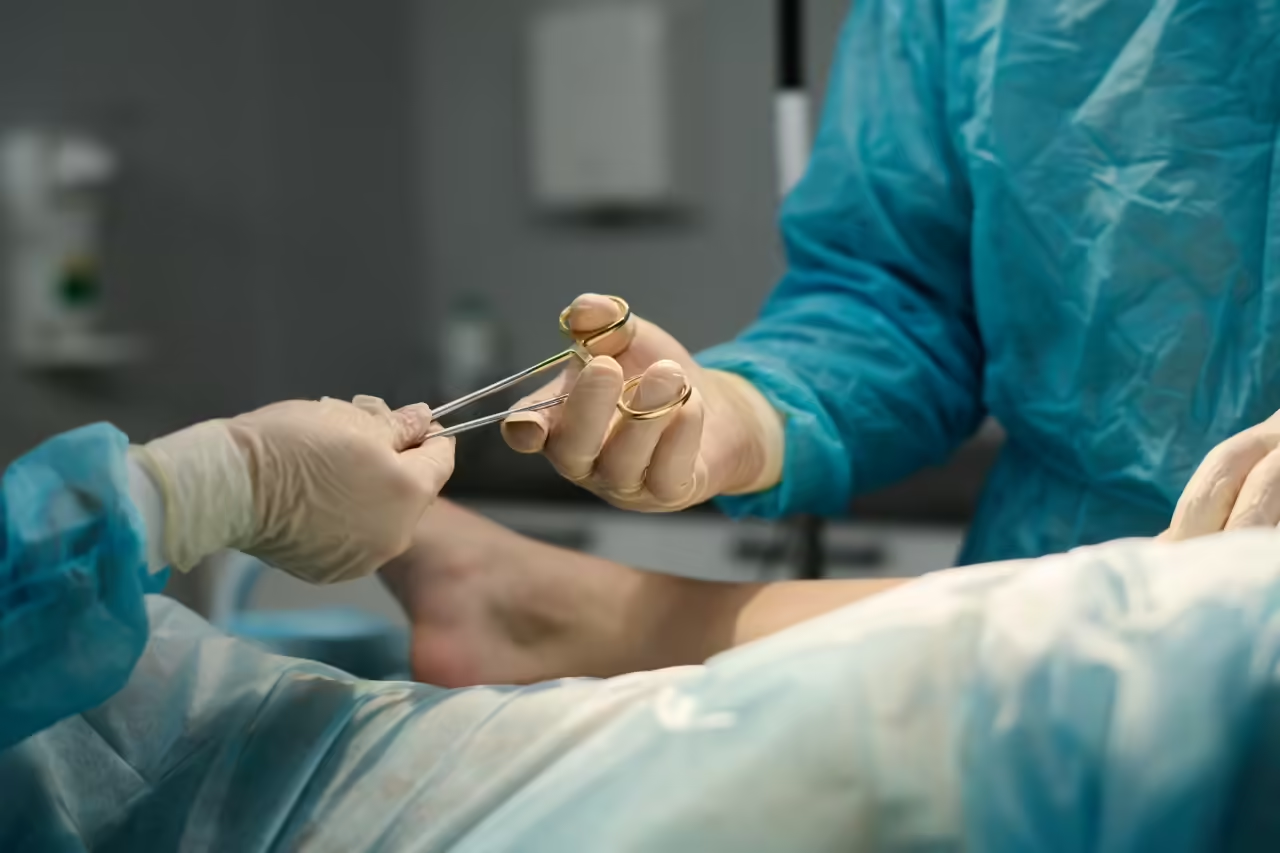
The surgery is performed under regional or general anaesthetic as a day case, meaning you go home the same day. Through tiny incisions, the bony prominence is removed and the metatarsal bone is cut and repositioned to correct the alignment of the toe. Small titanium screws hold the corrected bone in place. Fluoroscopy — live X-ray imaging — is used throughout to ensure precision. The procedure typically takes between 45 and 90 minutes depending on the complexity of the correction required.
Immediate Post-Operative Period
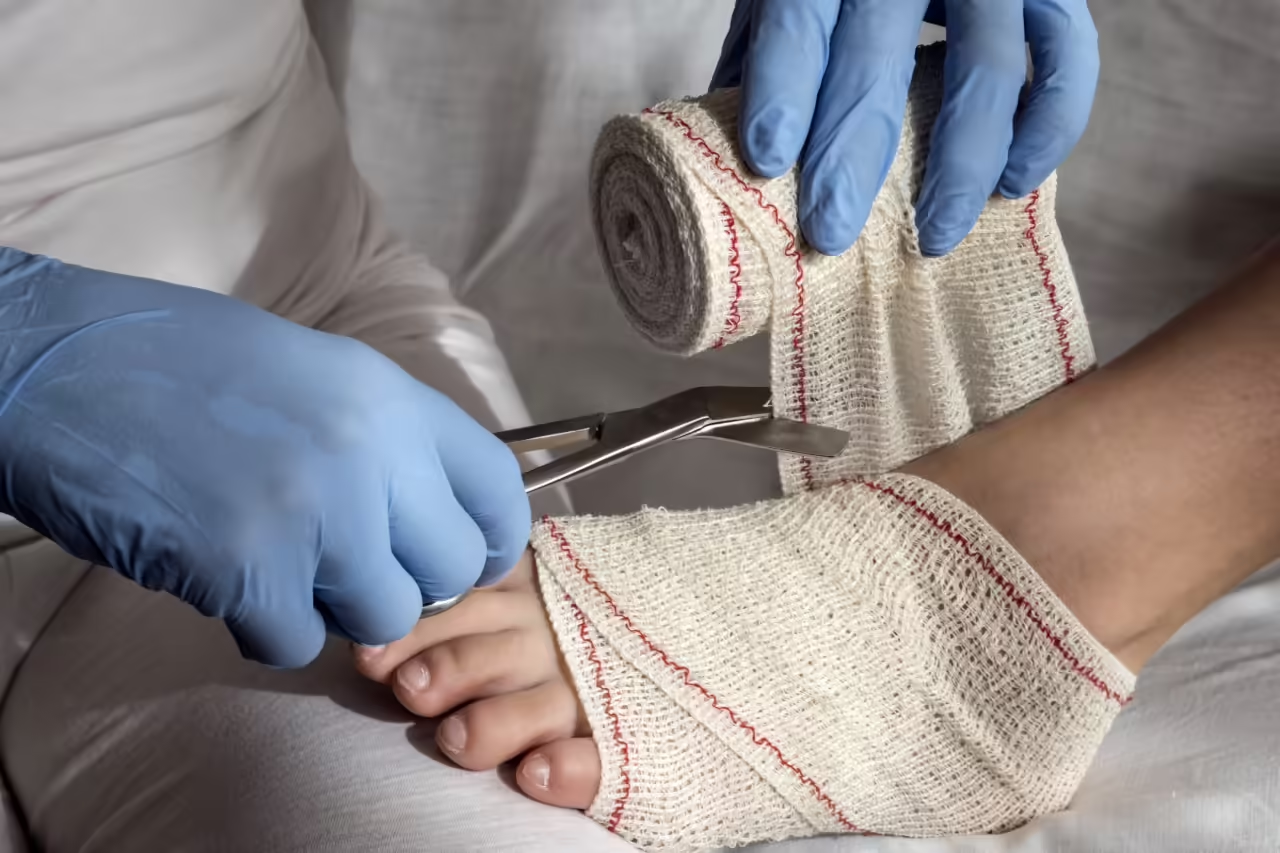
In most cases you will be able to walk on the foot from day one in a specially designed post-operative shoe, which offloads the forefoot and protects the repair. This is a significant advantage over some types of traditional surgery, where a period of non-weight-bearing on crutches is often required. Some swelling, bruising, and discomfort in the first two weeks is entirely normal and to be expected.
Recovery & Rehabilitation
Recovery varies between individuals but follows a broadly predictable pathway. Most patients are able to transition into a wide, comfortable shoe at around 2-4 weeks. Return to low-impact exercise such as swimming or cycling is typically possible from six weeks, with full return to sport and higher-impact activity from three months.
Follow-up appointments including repeat X-rays are arranged at regular intervals to monitor healing and progression, and physiotherapy input is recommended to optimise your outcome
Is MIS Right for Me?
Minimally invasive bunion surgery is suitable for a wide range of patients and deformity severities, from mild to moderate and in selected cases severe hallux valgus. However, it is not universally appropriate, and certain factors — including the pattern of the deformity, bone quality, the presence of arthritis within the joint, and previous surgery — may mean that a traditional open approach is more suitable for your particular case.
I will assess your X-rays and examine your foot carefully at consultation and give you an honest, personalised recommendation. If MIS is appropriate for you, I will explain exactly what the procedure involves, what results you can realistically expect, and what the recovery will require of you before you make any decision.