Services
All About the Assessment
Your first appointment is an opportunity for me to get a full picture of your foot or ankle problem. There is no need to feel anxious — nothing invasive happens at this stage. The aim is simply to understand what is causing your symptoms and to discuss the best way forward.
I will begin by asking you about your symptoms — when they started, what makes them better or worse, and how they affect your day-to-day life. I will also ask about your general health, any previous treatments you have tried, and your footwear habits. It is helpful to bring a list of any medications you take and, if you have them, any previous scan or X-ray reports.
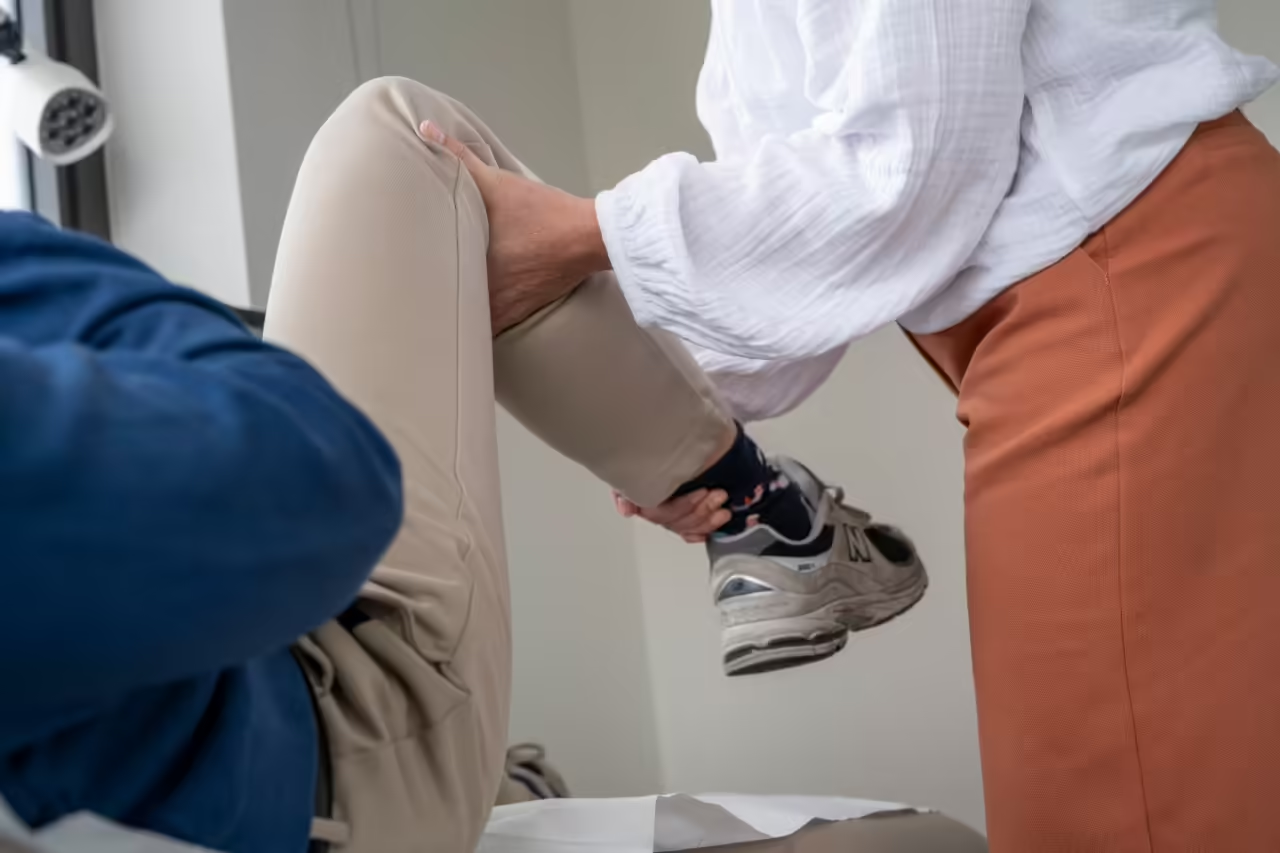
I will examine your foot and ankle which may include you at rest or standing. This allows me to assess your posture, alignment and range of movement. I will gently feel the affected areas to identify points of tenderness, swelling, or deformity. You will be asked to remove your shoes and socks, so wearing comfortable clothing that allows easy access to your lower legs is advisable.
Depending on what I find during the examination, I may request one or more of the following to build a clearer picture:
Weight-Bearing X-rays
The most common first investigation. Taken whilst you are standing to show the true alignment of your bones under load.
Ultrasound Scan
Useful for examining soft tissues such as tendons and ligaments, and for identifying fluid, cysts, or neuromas.
MRI Scan
Provides detailed images of both bone and soft tissue. Particularly helpful for tendon pathology, stress fractures, or complex joint problems.
CT Scan
Used when more detailed bony anatomy is needed, for example when planning complex reconstructive or joint surgery.
Blood Tests
Occasionally requested if there is a possibility of inflammatory arthritis, infection, or to assess general health ahead of a potential procedure.
Gait Analysis
In some cases a formal gait assessment may be arranged to examine how you walk and identify any biomechanical factors contributing to your symptoms. I will usually refer you to one of my podiatry colleagues if I believe this would be helpful.
At the end of your appointment I will explain what I have found and, where possible, discuss the likely diagnosis and the options available to you. If investigations have been requested, a follow-up appointment will be arranged to review the results and plan your care. Surgery isnt always the first conversation — wherever possible, conservative measures such as insoles, orthoses, physiotherapy, or injections will be considered first.