What We Treat
What is Arthritis?
Osteoarthritis of the big toe joint is one of the most common causes of forefoot pain in adults. Known medically as hallux rigidus — meaning “stiff big toe” — it is a progressive condition in which the cartilage covering the joint surfaces at the base of the big toe gradually wears away, leading to pain, stiffness, and eventually significant restriction of movement. It is a condition I treat regularly and one for which there are very effective surgical options when conservative management is no longer sufficient.
What is Hallux Rigidus?
The first metatarsophalangeal joint — the joint at the base of the big toe — is one of the hardest-working joints in the body. With every step we take, this joint must extend significantly to allow the foot to push off the ground. In hallux rigidus, the progressive loss of cartilage, combined with the formation of bony spurs (osteophytes) around the joint margin, increasingly restricts this movement. In mild cases there is discomfort and a slight reduction in movement; in advanced cases the joint may become almost completely rigid and painful even at rest.
It is the most common arthritic condition of the foot and affects men and women equally, typically presenting from the fourth decade onwards. Without treatment it tends to worsen over time, though the rate of progression varies considerably between individuals.


Causes & Contributing Factors
Hereditary Factors
The shape and length of the first metatarsal, joint anatomy, and cartilage quality are largely inherited. A family history of big toe joint problems significantly increases your risk.
Previous Injury
Traumatic injury to the big toe joint — including turf toe, fractures, or repeated minor injuries from sport — can damage the cartilage and predispose to early arthritis.
Biomechanical Factors
An elevated or long first metatarsal, abnormal foot mechanics, or a hypermobile first ray can all place abnormal stress on the joint and accelerate cartilage wear.
Inflammatory Arthritis
Conditions such as gout, rheumatoid arthritis, and psoriatic arthritis can accelerate joint destruction at the first MTPJ, sometimes leading to severe hallux rigidus at a younger age.
Symptoms
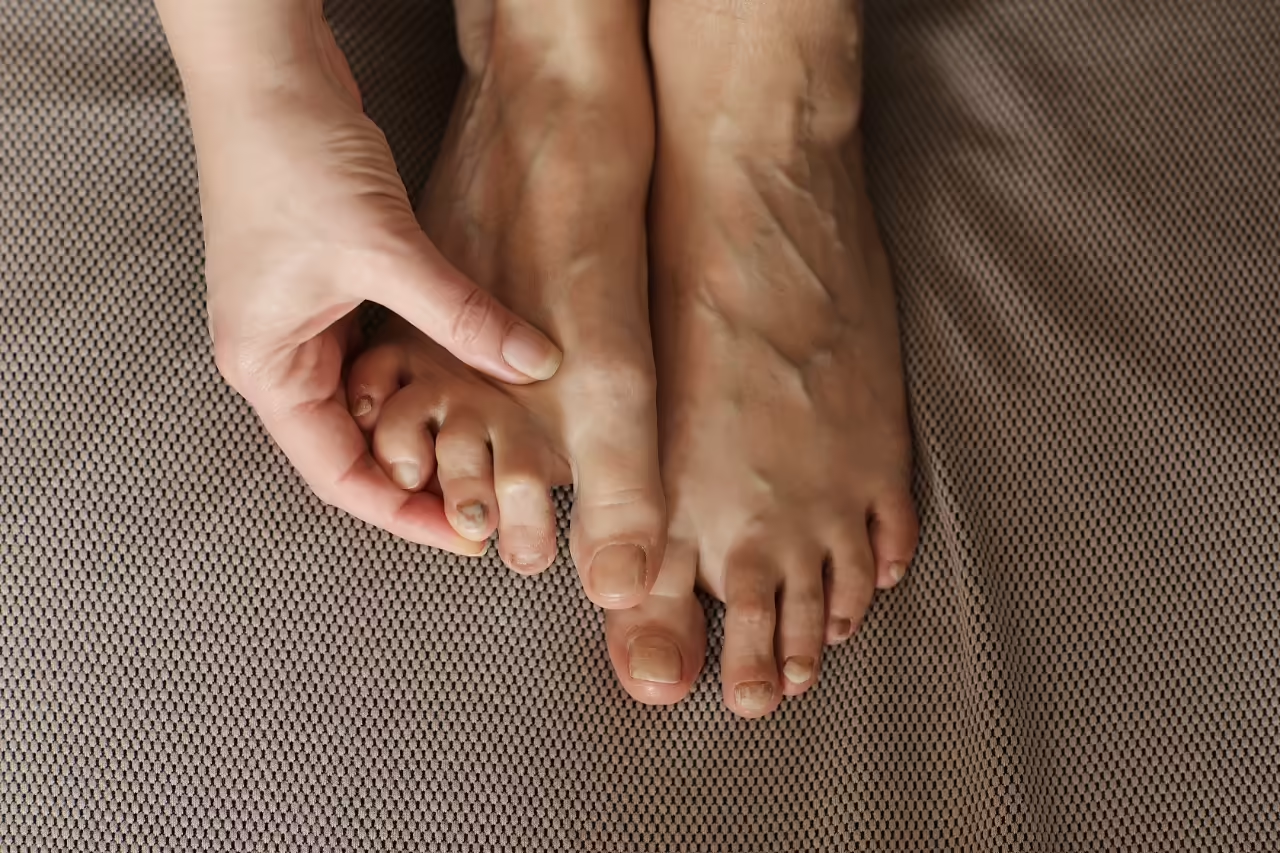
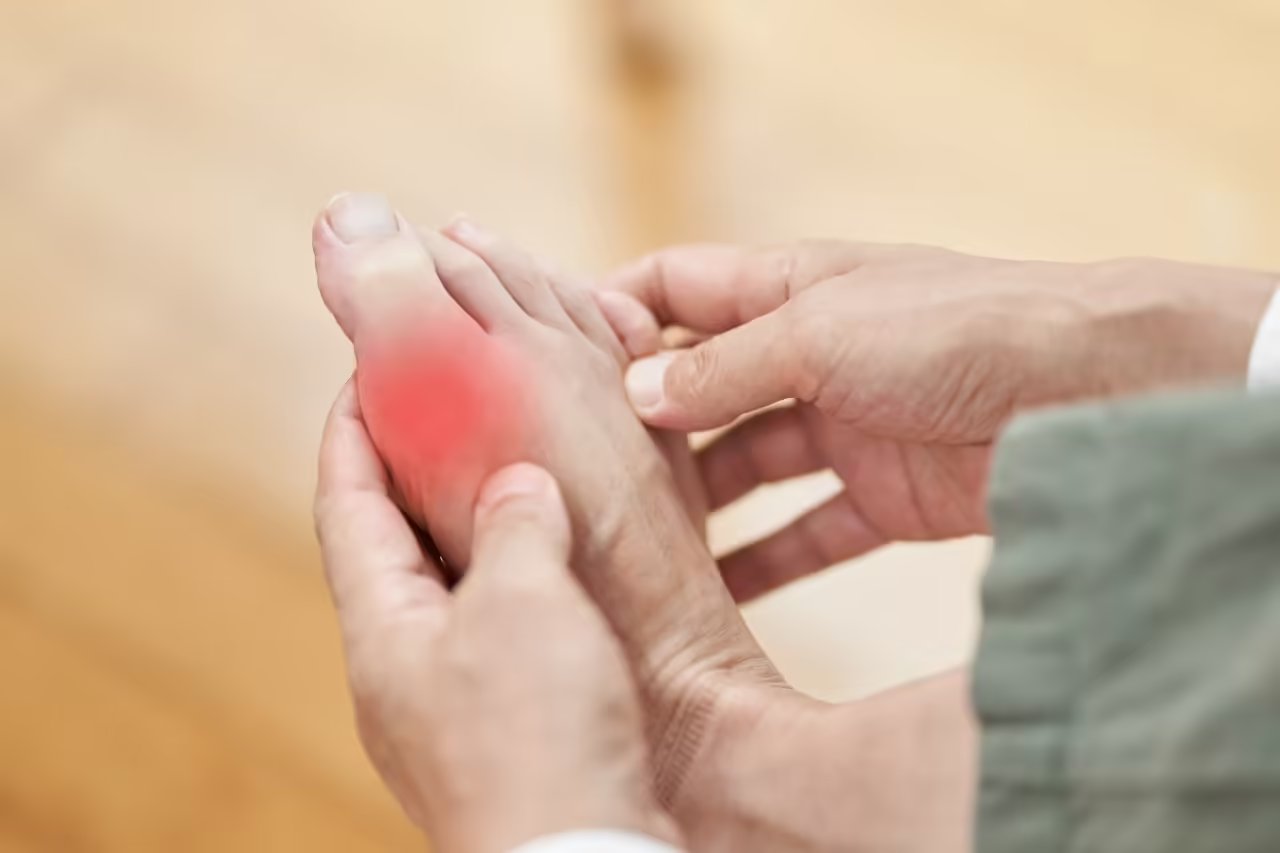
Symptoms typically develop gradually. In the early stages, pain and stiffness are most noticeable with activity — particularly walking, running, or climbing stairs — and ease with rest. A bony lump may develop on the top of the joint as osteophytes form. As the condition progresses, the range of movement at the joint diminishes, the pain becomes more constant, and patients often find themselves altering their walking to avoid bending the toe — walking more on the outer border of the foot — which in turn can cause secondary problems.
Grading the Condition
Hallux rigidus is classified into grades based on the degree of joint damage visible on X-ray and the degree of movement restriction. This grading guides treatment decisions — earlier grades are more amenable to joint-preserving surgery, whilst advanced grades with severe cartilage loss are better suited to joint fusion.
Grade 1 — Mild
Mild stiffness and pain. Small osteophytes. Cartilage largely intact. Good range of movement preserved.
Grade 2 — Moderate
Moderate pain and stiffness. Larger osteophytes. Significant reduction in range of movement. Some cartilage loss.
Grade 3 — Severe
Marked stiffness and constant pain. Extensive osteophytes. Severely restricted movement. Significant cartilage loss.
Grade 4 — End Stage
Near or complete loss of movement. Severe cartilage loss. Pain at rest. Joint functionally destroyed.
Non-Surgical Treatment
Conservative management is appropriate for all grades, particularly in the earlier stages, and for patients who wish to defer or avoid surgery. It will not reverse the arthritis or restore lost cartilage, but it can manage symptoms effectively and maintain function for many years.
Footwear Modification
Stiff-soled or rocker-bottom shoes reduce the need for the big toe joint to bend, significantly easing pain with walking. This is the most effective and accessible conservative measure.
Orthotic Insoles
A rigid extension under the big toe incorporated into an insole — limits movement at the joint and reduces pain during push-off.
Corticosteroid Injection
An injection into the joint can reduce synovial inflammation and provide meaningful pain relief, often lasting several months. Useful for symptom management and as a diagnostic tool.
Physiotherapy & Activity Modification
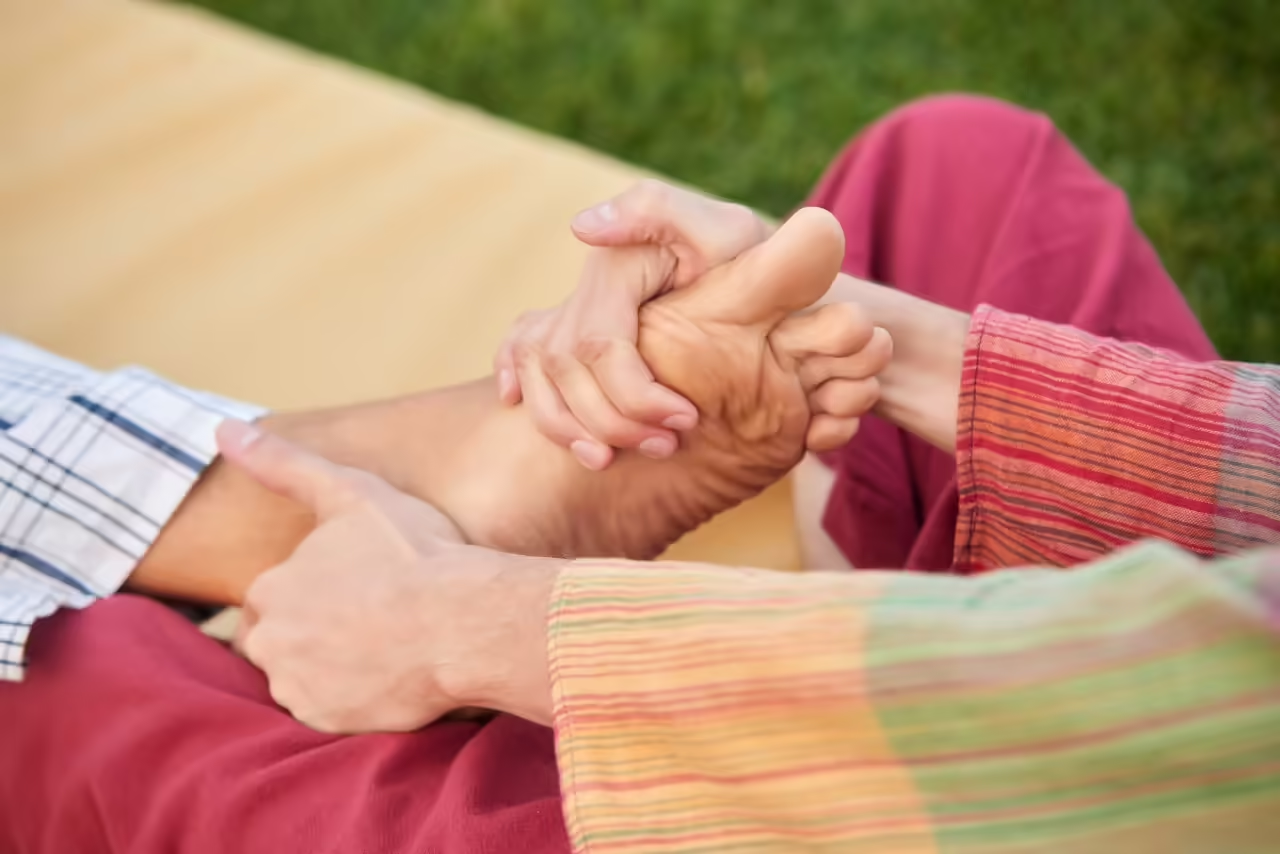
Gentle mobilisation, strengthening of the surrounding musculature, and modification of high-impact activities can help maintain function and delay progression.
Surgical Treatment Options
When conservative measures are no longer providing adequate relief, or where the grade of arthritis is advanced, surgery offers the most reliable and lasting solution. There are two principal surgical approaches — joint-preserving surgery and joint fusion — and the choice between them depends on the grade of arthritis, the amount of cartilage remaining, your age, activity level, and personal priorities. I will discuss the options with you in detail and give you an honest recommendation based on your X-rays and clinical findings.
Cheilectomy
Cheilectomy involves the surgical removal of the bony spurs (osteophytes) that have formed around the joint margin, together with a portion of the dorsal metatarsal head. By removing the mechanical obstruction that is blocking movement, the procedure restores a significant proportion of the joint’s range of motion and relieves pain — without sacrificing or fusing the joint itself.
Advantages
- Joint is preserved — movement is maintained or improved
- Relatively straightforward procedure with a quick recovery
- Can return to normal footwear within 4–6 weeks
- Does not prevent future surgery if needed
- High patient satisfaction in appropriately selected cases
Limitations
- Does not address the underlying arthritis — spurs can regrow
- Not suitable for grades 3 or 4 where cartilage loss is severe
- Results may deteriorate over time as arthritis progresses
- Some patients require further surgery in the longer term
Osteotomy Procedures
In some patients, particularly where the arthritis is related to an abnormal metatarsal length or elevation, a metatarsal osteotomy — a surgical repositioning of the metatarsal head — can decompress the joint and redistribute load to reduce symptoms. These procedures are more complex than cheilectomy and are used in carefully selected cases where joint geometry is a significant driver of the problem.
Advantages
- Addresses contributing bony geometry
- Joint preserved with potential symptom improvement
- Can be combined with cheilectomy
Limitations
- Longer recovery than cheilectomy alone
- Suitable only in carefully selected patients
- Underlying arthritis will continue to progress
First metatarsophalangeal Joint Fusion (Arthrodesis)
For moderate to advanced hallux rigidus — where the joint cartilage is severely or completely lost — first MTPJ fusion is the gold standard surgical treatment and the procedure I most commonly recommend for grades 3 and 4 disease. The arthritic joint surfaces are removed and the bones are held together in an optimal functional position using a combination of a dorsal plate and screws, allowing them to fuse permanently over eight to twelve weeks.
The toe is positioned in a precise degree of dorsiflexion and slight valgus — the ideal position for comfortable, functional walking — and once fused, this position is permanent. The arthritic pain is eliminated entirely as there is no longer a joint to be painful. The surrounding joints of the foot adapt well to the loss of movement, and the vast majority of patients are able to walk comfortably, exercise, and wear a wide range of footwear including many normal shoe styles.
Advantages
- Reliably and permanently eliminates joint pain
- Gold standard with a very strong evidence base
- Consistently high long-term patient satisfaction
- Suitable for all grades including end-stage disease
- Durable outcome — no further joint surgery needed
- Active patients including runners can return to sport
Limitations & risks
- Permanent loss of movement at the joint
- High heels above approximately 4cm are not possible
- Non-union — failure of the bones to fuse (5–10%)
- Hardware irritation may require screw removal
- Malunion — fusion in a poor position
- Transfer stress to the other joints over time
Most patients can walk in a post-operative shoe from day one. Return to normal footwear is typically achieved at eight to twelve weeks, and full return to activity — including sport — by four to six months.
Joint Replacement (Arthroplasty)
Selected patients only
First MTPJ replacement — in which the damaged joint surfaces are replaced with a prosthetic implant — has been used as an alternative to fusion in selected patients who wish to preserve movement at the joint. Whilst the concept is appealing, the evidence for first MTPJ replacement is significantly less robust than for fusion, and historically implant designs have had high failure rates with unpredictable long-term outcomes.
Potential advantages
- Preserves some degree of joint movement
- No permanent fusion — revisable in principle
- May suit specific patients with particular footwear needs
Significant limitations
- Weaker evidence base than fusion
- Higher revision and failure rates in published literature
- Implant loosening, subsidence, and bone loss
- Revision surgery more complex than primary fusion
- Not routinely offered — fusion remains preferred
How Do I Choose The Right Operation?
The decision between joint-preserving surgery and fusion is one of the most important conversations we will have at consultation. As a general guide:
Cheilectomy is best suited to…
Grades 1 and 2 with good residual cartilage, younger active patients wishing to preserve joint movement, and those with predominantly dorsal spur-related symptoms.
Fusion is best suited to…
Grades 3 and 4 with significant cartilage loss, patients with pain throughout the range of movement, those who have failed previous joint-preserving surgery, and any patient where a reliable and durable result is the priority.
Not Sure Whether You Need a Specialist?
If you have been living with stiffness and pain at the base of your big toe, I would encourage you to seek a specialist assessment sooner rather than later. Earlier-grade disease offers more surgical options, and patients who present at grade 1 or 2 have the best chance of a joint-preserving outcome. By the time the joint is at grade 4, fusion is almost always the right answer — and whilst it is an excellent operation, most patients wish they had sought advice earlier.