
Services
What is Ingrown Toenail Surgery?
Problems affecting the toenails are among the most common reasons people seek specialist foot care. Whilst they may appear straightforward, nail conditions can cause significant pain, difficulty with footwear, and in some cases recurrent infection that affects daily life. As a podiatric surgeon, I am able to offer both conservative and definitive surgical treatments, tailored to the nature and severity of your condition.
Common Nail Conditions
Ingrown Toenails (Onychocryptosis)
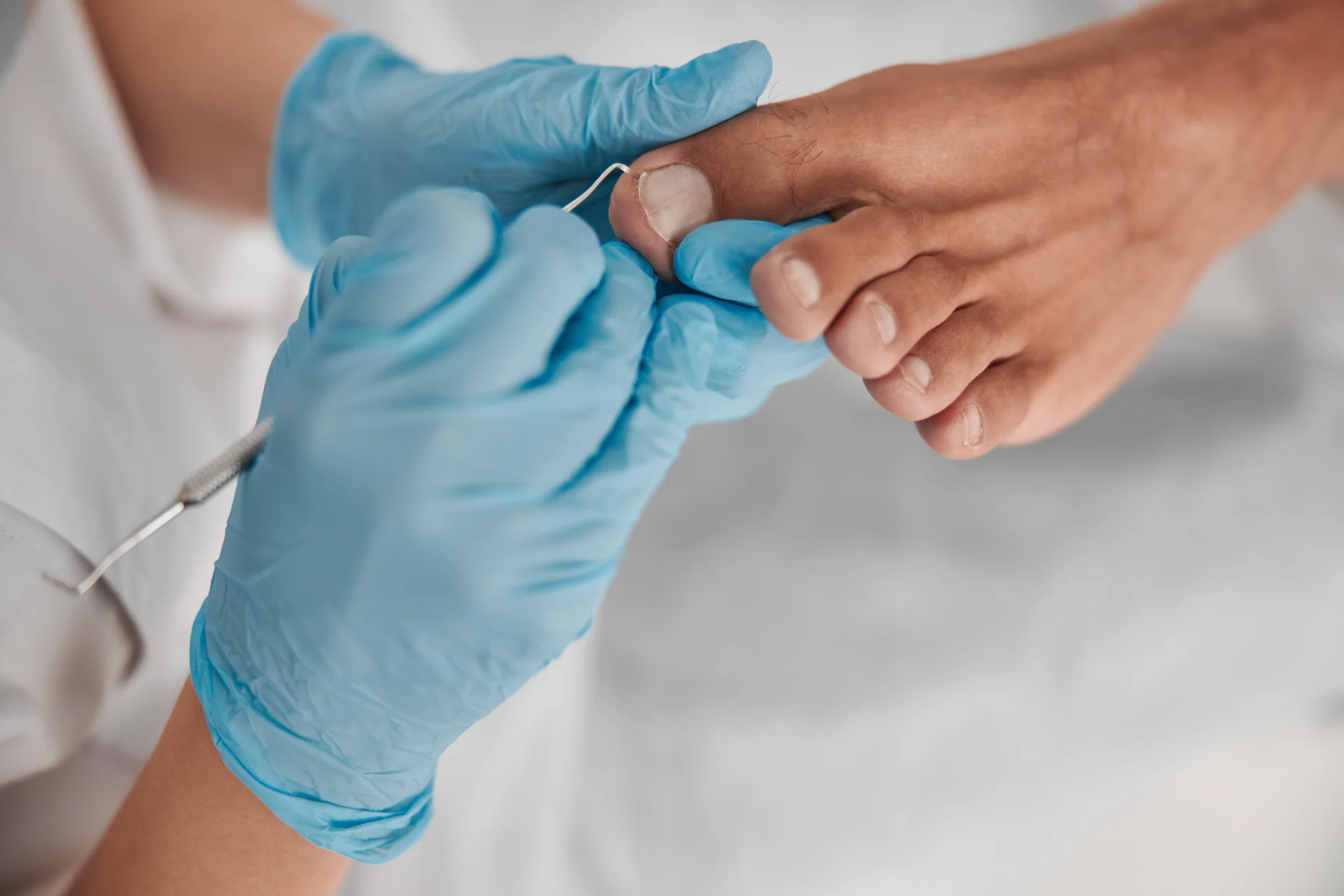
An ingrown toenail occurs when the edge or corner of the nail pierces or presses into the surrounding skin, causing pain, swelling, and redness. In more advanced cases, the skin can become infected, producing discharge, and in chronic cases, a raised mound of granulation tissue — sometimes called a proud flesh — can develop at the nail edge. The big toe is most commonly affected, though any toe can be involved.
Ingrown toenails can result from a number of factors including incorrect nail cutting technique, naturally curved or involuted nail shape, tight footwear, trauma, or a hereditary tendency towards the condition. They are particularly common in teenagers and young adults, as well as in those who are physically active.
Without treatment, ingrown toenails rarely resolve on their own and tend to recur. Definitive surgical treatment offers excellent long-term results and is carried out under local anaesthetic as a minor procedure.
Thickened & Damaged Nails (Onychauxis & Onychogryphosis)
Toenails can become abnormally thickened, discoloured, or distorted as a result of repeated trauma — such as pressure from footwear during sport or work — or as a consequence of damage to the nail matrix over time. This is particularly common in the big toenail and in older patients. In severe cases the nail can become ram’s horn-like in appearance, curling and thickening to the point where it is difficult to cut and causes pressure pain within shoes.
Thickened nails caused by trauma alone are not infectious, though they can be difficult to distinguish from fungal nail disease without laboratory testing. Where the nail is causing significant discomfort or is cosmetically distressing, surgical removal with permanent prevention of regrowth may be considered.
Fungal Nail Infection (Onychomycosis)
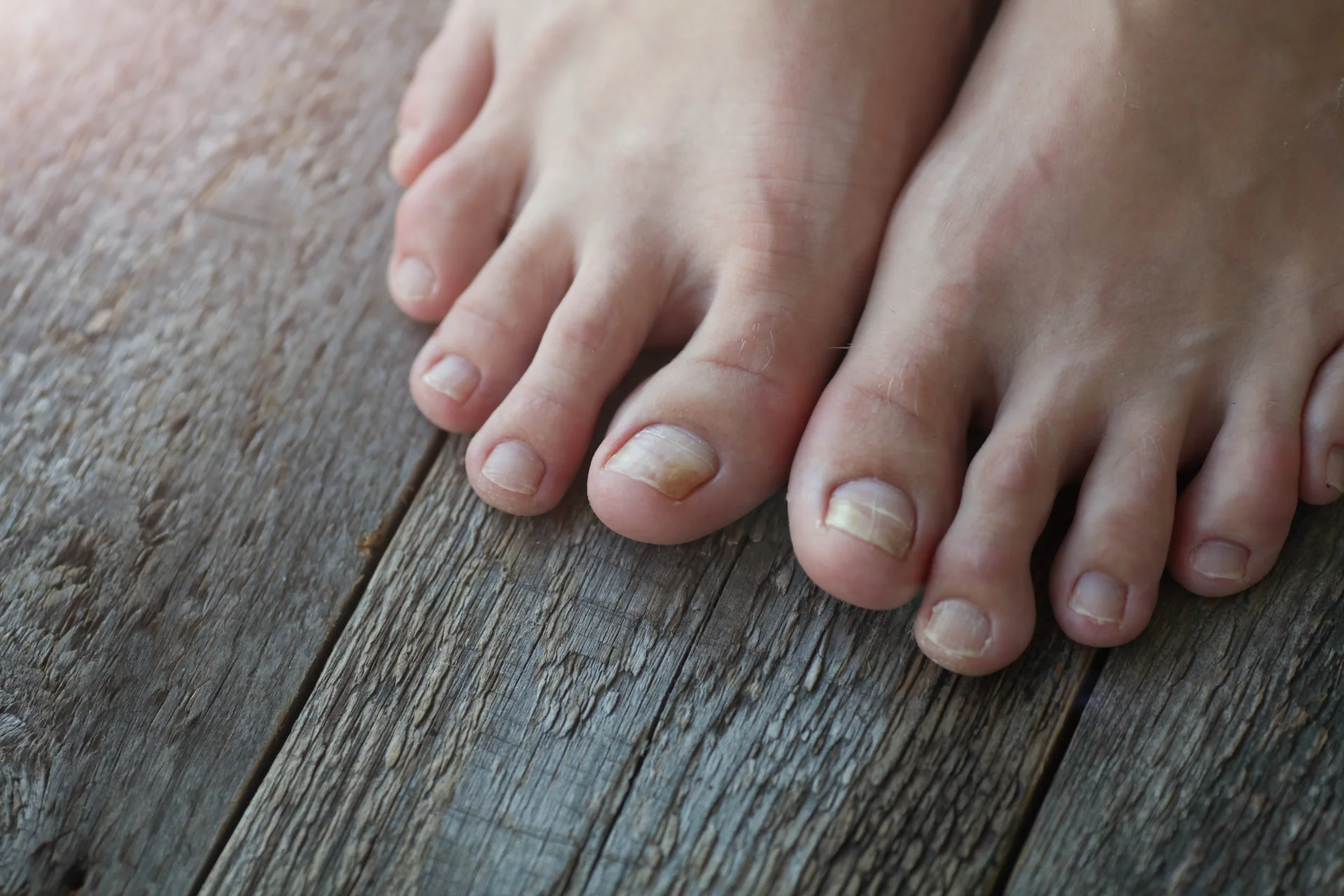
Fungal nail infection is extremely common and affects a significant proportion of the adult population. It occurs when dermatophyte fungi — the same organisms that cause athlete’s foot — invade the nail, causing it to become discoloured (yellow, white, or brown), thickened, brittle, and crumbly. In more advanced cases the nail can separate from the nail bed and develop an unpleasant odour.
Diagnosis can usually be made on clinical examination, though nail clippings sent for laboratory culture and microscopy may be requested to confirm the causative organism and guide treatment. This is particularly important before committing to a course of oral antifungal medication, which requires a period of several months and is not suitable for all patients.
In cases where fungal infection is extensive, the nail is causing pain or pressure, or antifungal treatment has failed, surgical removal of the nail with ablation of the nail bed can be considered to provide a definitive resolution.
Surgical Treatment Options
Nail surgery is commonly performed under local anaesthetic, meaning the toe is completely numb during the procedure. You will be awake throughout and will feel no pain, though some pressure sensation is normal. For patients who have a fear of medical procedures or injections general anaesthetic (surgery whilst you are asleep) is offered. The procedure is carried out in a clinical setting and you will be able to go home shortly afterwards. There are two principal surgical approaches, which can each be applied to either part of the nail (partial) or the entire nail (total):
Partial Nail Resection
The offending edge or portion of the nail is removed, whilst the rest of the nail is left intact. This is the most commonly performed procedure for ingrown toenails where only one or both edges are involved and the remainder of the nail is healthy. The result is a slightly narrower but otherwise normal-looking nail.
To prevent the removed portion from regrowing and the problem recurring, the nail matrix cells responsible for producing that strip of nail are destroyed — either chemically using phenol, or surgically by excision of the matrix tissue.
Total Nail Resection
The entire nail plate is removed. This is indicated when the nail as a whole is severely affected — for example in extensive fungal infection, significant trauma-related nail dystrophy, or where the nail is causing widespread pain and pressure. It may also be appropriate where an ingrown toenail is very advanced or where previous partial procedures have been unsuccessful.
As with partial resection, the procedure can be performed with or without permanent ablation of the nail bed, depending on whether you wish the nail to regrow.
Preventing Nail Regrowth — Phenol Versus Surgical Excision
Where permanent prevention of nail regrowth is desired, there are two methods used to ablate the nail matrix:
Phenolisation (Chemical Ablation)
Phenol is a caustic chemical agent applied directly to the nail matrix after the nail has been removed. It destroys the cells responsible for nail production and is highly effective, with a success rate of over 95% when performed correctly. It is the most widely used method in the UK and is well established in both NHS and private practice.
The wound heals by secondary intention over two to six weeks with simple dressing changes. There is typically a small amount of discharge during this healing period, which is a normal part of the process.
Surgical Matrix Excision
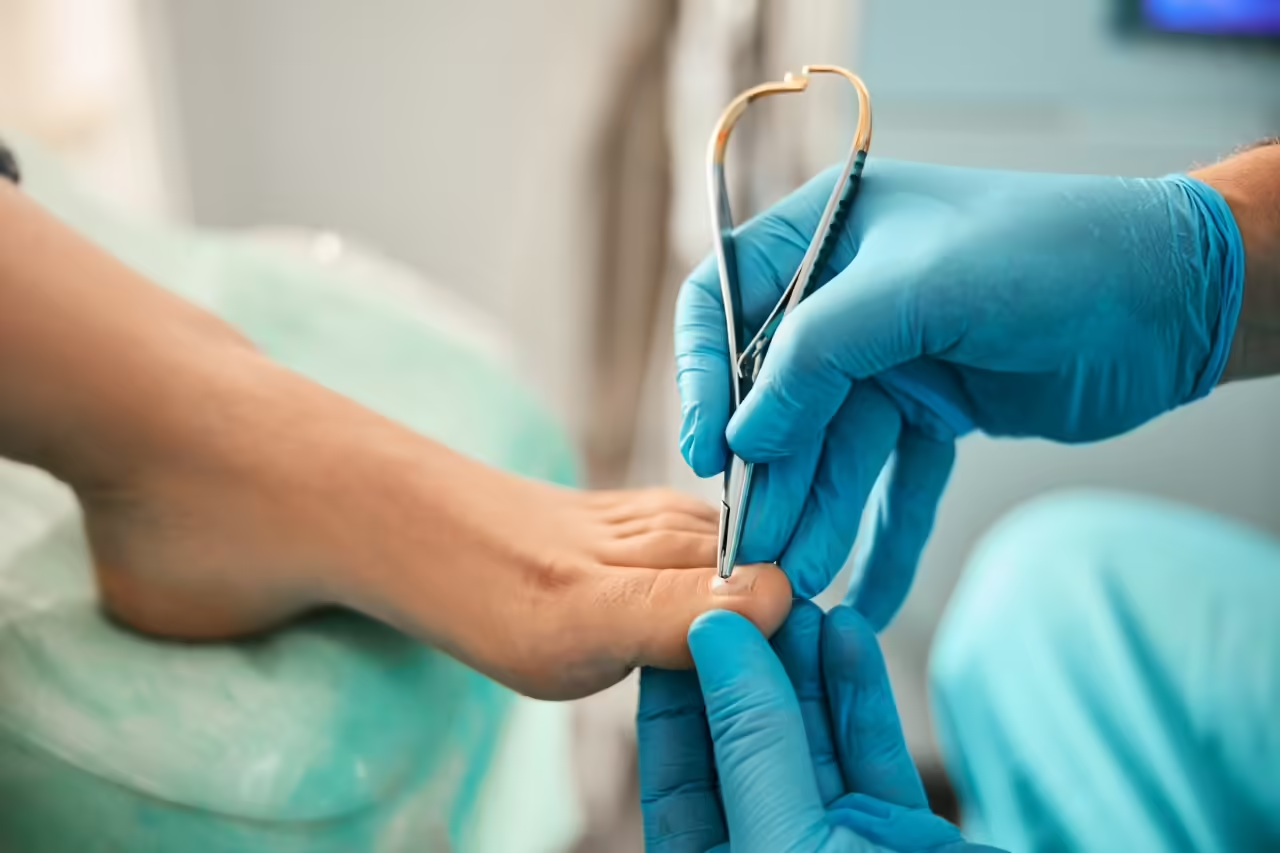
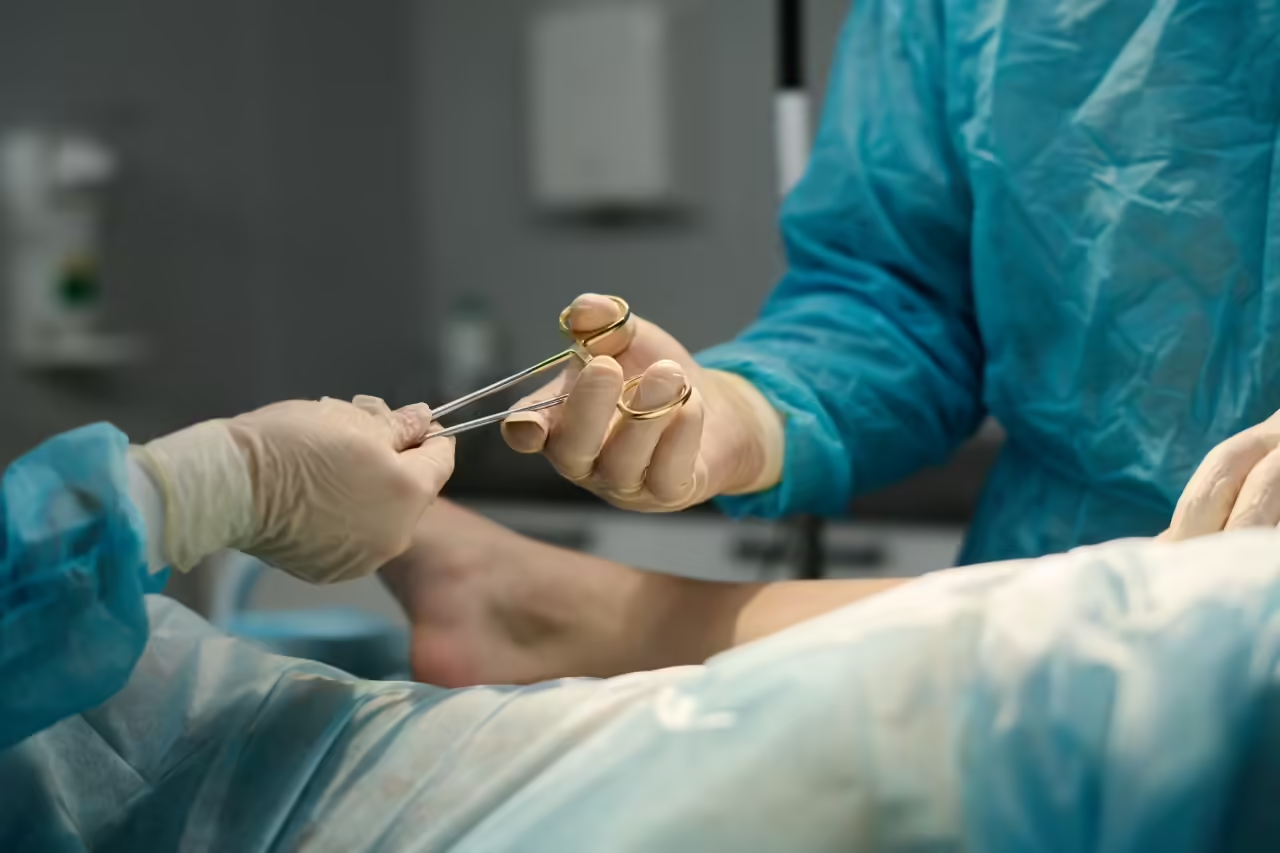
In surgical excision, the nail matrix tissue is physically removed using fine surgical instruments. This approach may be preferred in cases where phenol is contraindicated, where previous phenolisation has been unsuccessful, or where a more precise surgical result is required — for example in patients where chemical agents carry additional risk.
The wound is closed with sutures and typically heals more quickly than after phenolisation, though the procedure is technically more demanding and requires a surgical setting.
- Same-day Discharge – You will go home on the day of your procedure. A dressing will be applied and you will be given clear aftercare instructions.
- Footwear – Bring a wide, comfortable shoe or sandal to your appointment. Tight footwear should be avoided during the healing period.
- Activity – Most patients can return to light activity and desk-based work within a day or two. Strenuous activity and sport should be avoided until healing is complete.
- Healing time – After phenolisation, complete healing typically takes two to six weeks. Surgically closed wounds generally heal more quickly.