Services
What is Achilles Treatment?
The Achilles tendon is the largest and strongest tendon in the body, connecting the calf muscles to the heel bone. Despite its strength, it is one of the most commonly injured tendons, and Achilles problems can range from chronic pain and stiffness to more complex degenerative or structural conditions that significantly affect mobility and quality of life.
I treat the full spectrum of Achilles tendon conditions and offer both non-surgical and surgical options depending on the nature and severity of your problem. The vast majority of patients are managed successfully without surgery, but where conservative treatment has been exhausted, surgical intervention can produce excellent results in carefully selected patients.
Understanding Your Condition
Midportion Achilles Tendinopathy
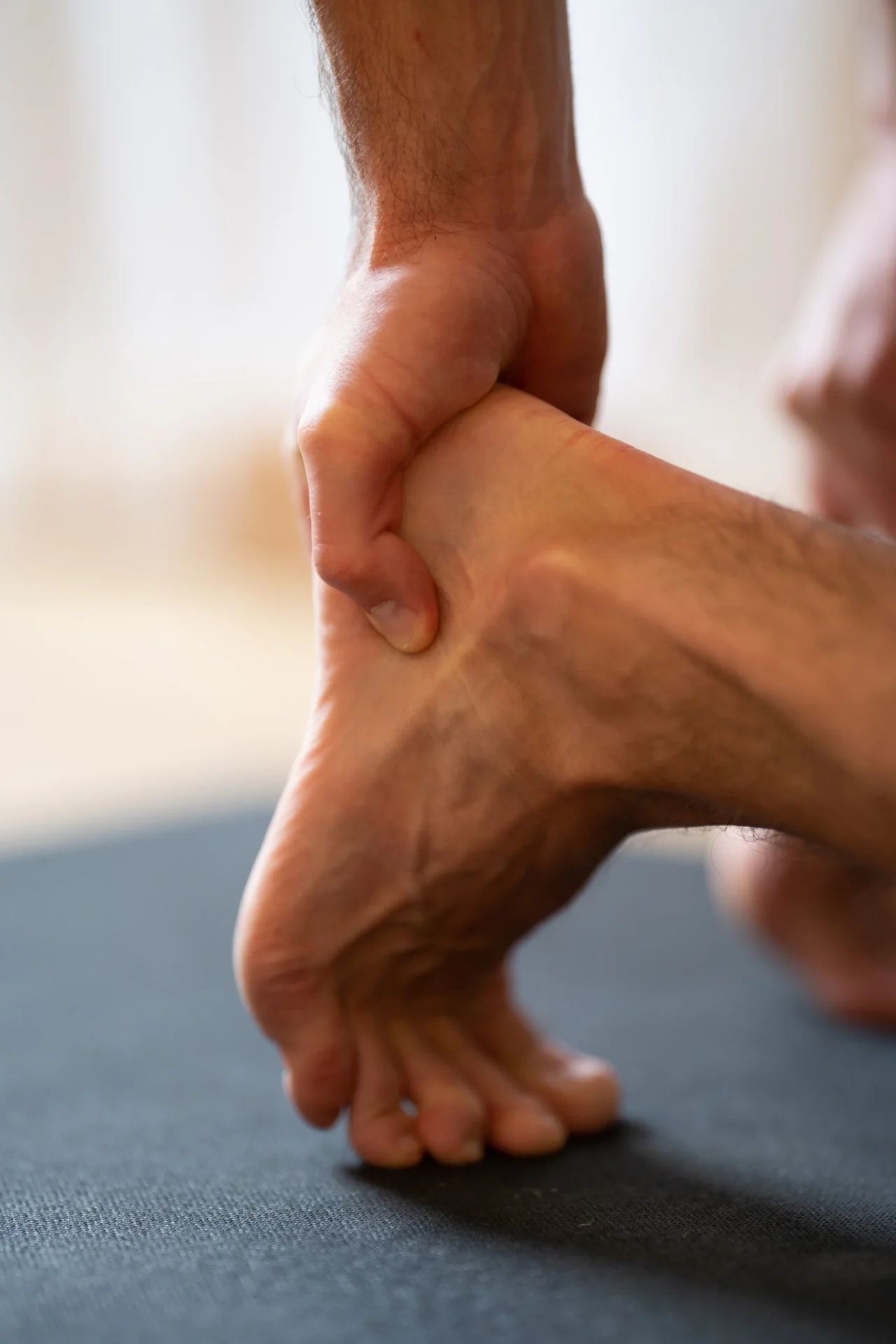
Midportion tendinopathy affects the middle section of the tendon, typically 2–6cm above the heel bone. It is characterised by pain, stiffness, and localised swelling in this region, often worse first thing in the morning or after periods of rest. It is particularly common in runners and other active individuals, but also affects those who are less active, especially with increasing age.
The underlying process is one of tendon degeneration rather than simple inflammation — the tendon fibres become disorganised and abnormal pain-conducting blood vessels grow into the affected area. This is why the condition often proves stubborn to treat and why rest alone rarely resolves it.
Insertional Achilles Tendinopathy
Insertional tendinopathy affects the point at which the tendon attaches to the back of the heel bone (the calcaneus). In addition to tendon degeneration at this attachment point, many patients develop a bony prominence — known as a Haglund’s deformity or heel bump — on the back of the calcaneous, as well as calcification within the tendon itself. There is often associated inflammation of the retrocalcaneal bursa, the small fluid-filled sac that sits between the tendon and the bone.
Insertional tendinopathy tends to respond less predictably to conservative measures than midportion disease, and surgical intervention is more frequently required in patients with significant bony changes or calcification.
Non-Surgical Treatment
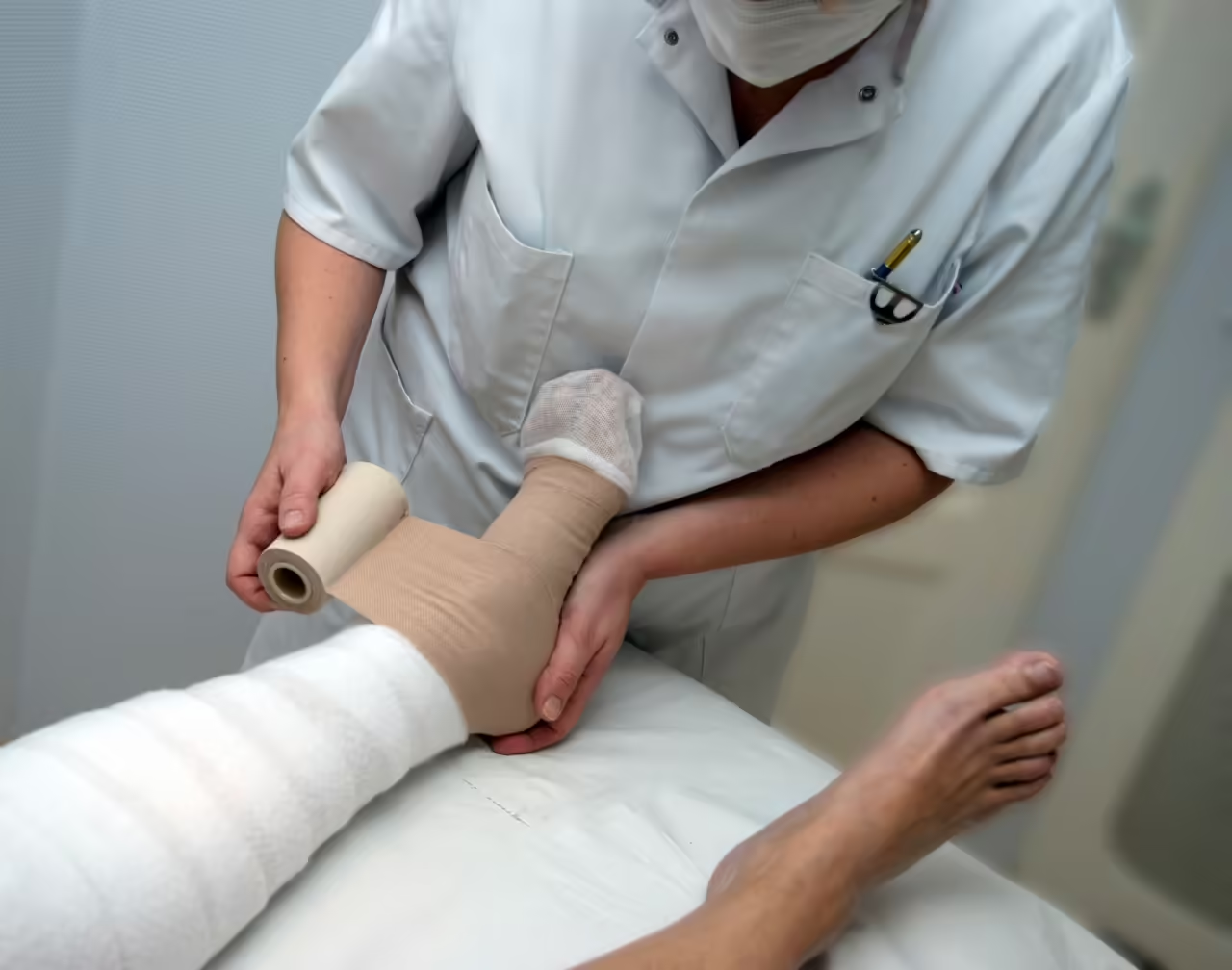
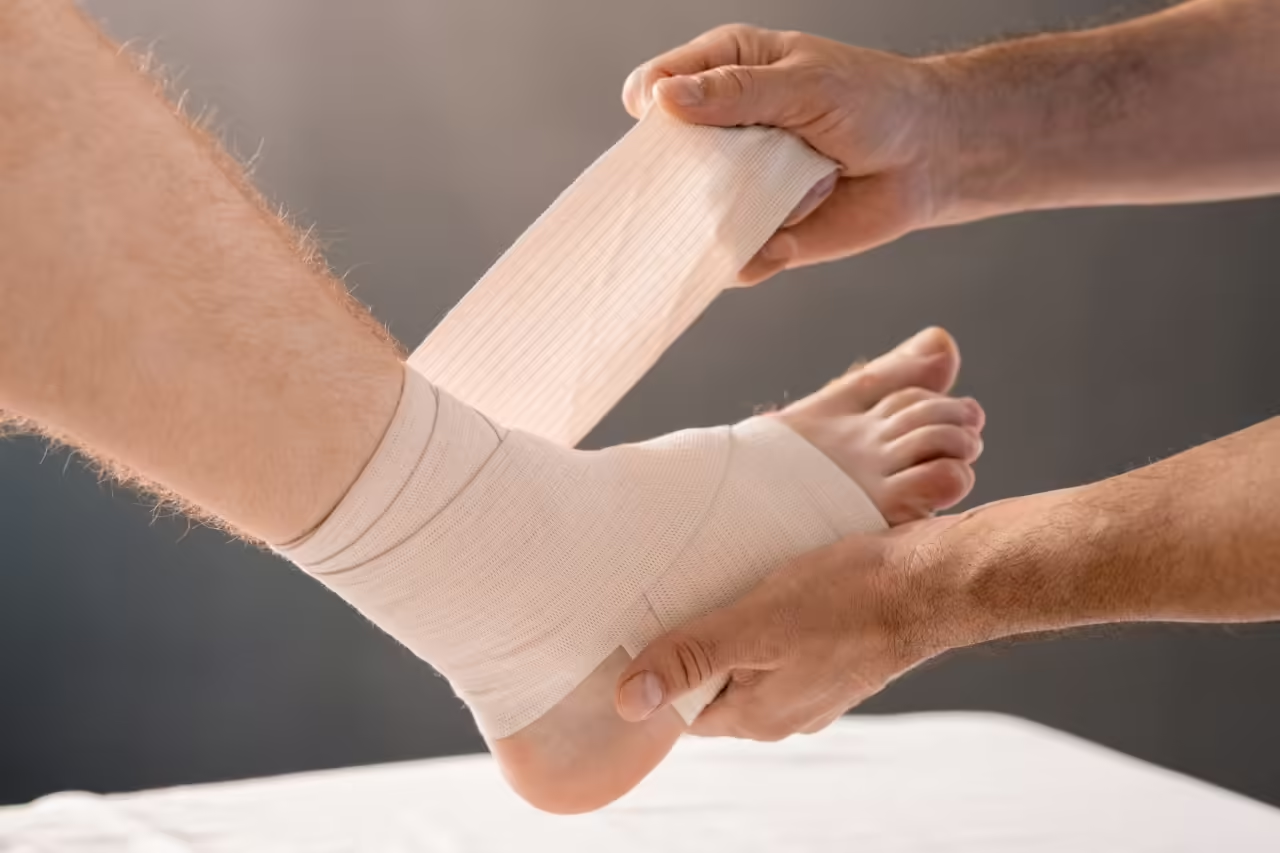
Before any surgical option is considered, a thorough course of conservative management is always undertaken. This typically includes a structured physiotherapy programme centred on progressive loading, footwear modification, heel raises or custom orthotic insoles, and activity modification.
Where conservative measures have not produced sufficient improvement, I offer high volume injection therapy under ultrasound guidance. A larger volume of fluid — combining saline, local anaesthetic, and in selected cases a small amount of corticosteroid — is delivered to the space between the tendon and the underlying fat pad. This mechanically disrupts the abnormal blood vessels and nerve fibres that drive pain in tendinopathy, and is often combined with a renewed period of rehabilitation. Full details of this treatment are outlined in the injections section of this website.
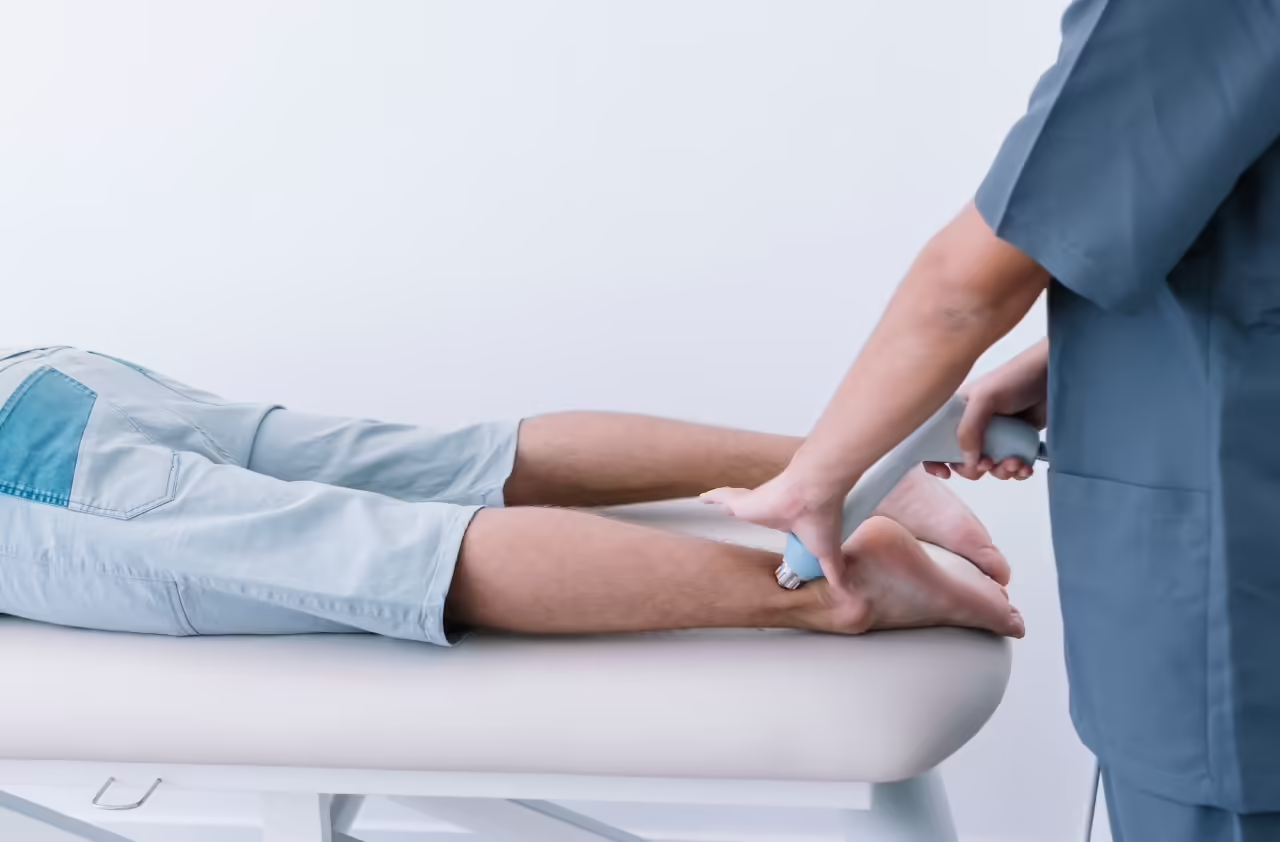
Extracorporeal shockwave therapy (ESWT) may also be considered as a non-invasive adjunct for patients with persistent symptoms, and has a good evidence base particularly for midportion disease.
Surgical Options
Surgery for Achilles tendon conditions is considered when symptoms have persisted for at least six months despite appropriate conservative treatment. The procedure recommended will depend on the location and nature of your problem, the degree of tendon degeneration, and the presence or absence of bony changes. I will discuss the most appropriate option for you in detail at your consultation.
Achilles Tendon Lengthening
In patients where tightness of the calf muscle complex (equinus) is contributing to Achilles overload and symptoms, surgical lengthening of the tendon or the gastrocnemius muscle may be recommended. This reduces the mechanical stress placed on the tendon with each step, addressing one of the underlying drivers of tendinopathy. It is often performed in combination with other procedures rather than in isolation.
Tendon Decompression (Tenolysis)
In midportion tendinopathy, surgical decompression involves releasing the thickened tissue and adhesions that have formed around the tendon, freeing it from the surrounding paratenon. This removes the ingrowth of abnormal blood vessels and nerves that drive the pain cycle. Decompression is well suited to patients with significant paratenon thickening and neovascularisation.
Removal of Insertional Calcification & Diseased Tendon Tissue
For insertional tendinopathy, surgery often involves detaching the tendon from the heel bone in order to access and excise the degenerate and calcified tissue within the tendon substance. The healthy tendon is then reattached securely to the bone using anchors. Whilst this is a more extensive procedure with a longer recovery, it addresses the root cause of insertional disease and is associated with high patient satisfaction in appropriately selected cases.
Removal of Heel Bump (Haglund's Resection)
Where a prominent Haglund’s deformity — the bony bump at the back of the heel — is a significant contributor to symptoms, surgical removal of this prominence relieves the impingement between the bone and the tendon and decompresses the retrocalcaneal bursa. This can be performed as an isolated procedure or in combination with tendon work depending on the extent of the associated tendon pathology.
Zadek Osteotomy
I am pleased to offer the Zadek osteotomy using both traditional open and minimally invasive techniques for suitable patients. The minimally invasive approach uses small keyhole incisions and fluoroscopic guidance to perform the same bony correction with less soft tissue disruption, resulting in reduced post-operative swelling, smaller scars, and a more comfortable early recovery compared to the open technique.
The choice between open and minimally invasive Zadek will be discussed with you at consultation, taking into account the severity of the deformity, your bone quality, and your individual circumstances.
Treatment of Degenerative Tendon Disease
In cases of advanced tendon degeneration, a significant portion of the tendon may be structurally compromised. Where the area of diseased tissue is extensive, simple debridement alone may not provide sufficient tendon integrity, and a tendon augmentation or transfer procedure may be necessary to reinforce or replace the damaged section. The flexor hallucis longus (FHL) tendon (the tendon that moves your big toe downwards) — which runs close to the Achilles — is the most commonly used donor tendon for this purpose, and its transfer to reinforce the Achilles is a well-established procedure with good long-term outcomes.
The extent of tendon involvement will be assessed carefully on MRI imaging prior to surgery, and the surgical plan will be tailored accordingly. I will explain clearly what reconstruction is planned, what this means for your recovery, and what functional outcome you can expect.
Benefits, Risks & Recovery
Potential Benefits
- Significant and lasting reduction in pain
- Improved function and return to activity
- Correction of underlying structural problem
- Avoidance of long-term tendon rupture risk in degenerative disease
General Surgical Risks
- Infection, bleeding, wound healing problems
- Deep vein thrombosis (DVT)
- Nerve or vessel injury
- Anaesthetic risks
Achilles-Specific Risks
- Tendon re-rupture or weakening
- Sural nerve injury causing numbness
- Incomplete resolution of symptoms
- Hardware irritation requiring removal
- Prolonged swelling and stiffness
Recovery Overview
- Boot or cast for 6–12 weeks depending on procedure
- Physiotherapy essential throughout recovery
- Return to normal shoes from 3–4 months
- Full return to sport typically 6–12 months
Important: Achilles tendon surgery generally carries a longer and more demanding recovery than many other foot procedures. Patients should be prepared for a rehabilitation programme of six months to one year before full activity is restored. All risks and realistic expectations will be discussed fully with you before any decision to proceed with surgery is made.