What We Treat
All About Plantar Fibromatosis
Plantar fibromatosis — also known as Ledderhose disease — is a condition I have a particular specialist interest in and considerable experience treating. It is frequently misdiagnosed and poorly understood, leaving many patients without a clear explanation of their condition or a structured plan for treatment.
National Clinical Adviser — British Dupuytren’s Society
I serve as a national clinical adviser to the British Dupuytren’s Society, with a specific advisory role focused on plantar fibromatosis. This reflects my depth of expertise in this condition and my commitment to improving the understanding and management of Ledderhose disease at a national level.
What is Plantar Fibromatosis?
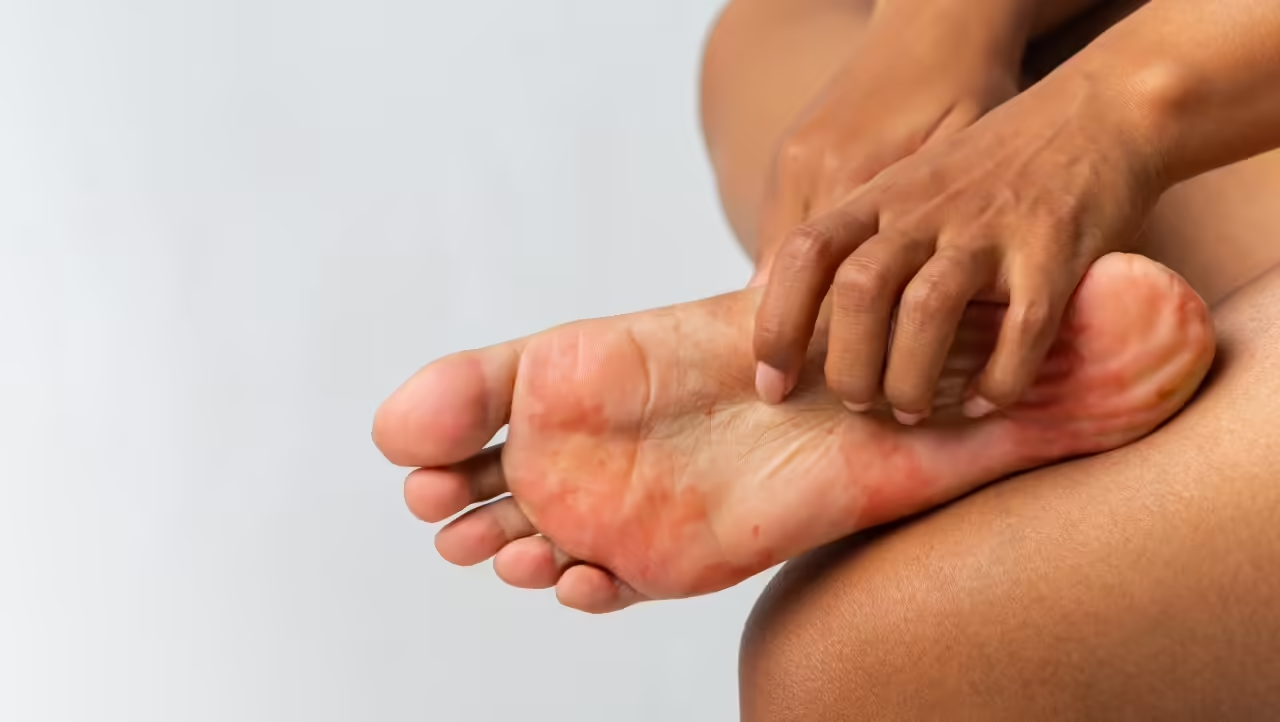
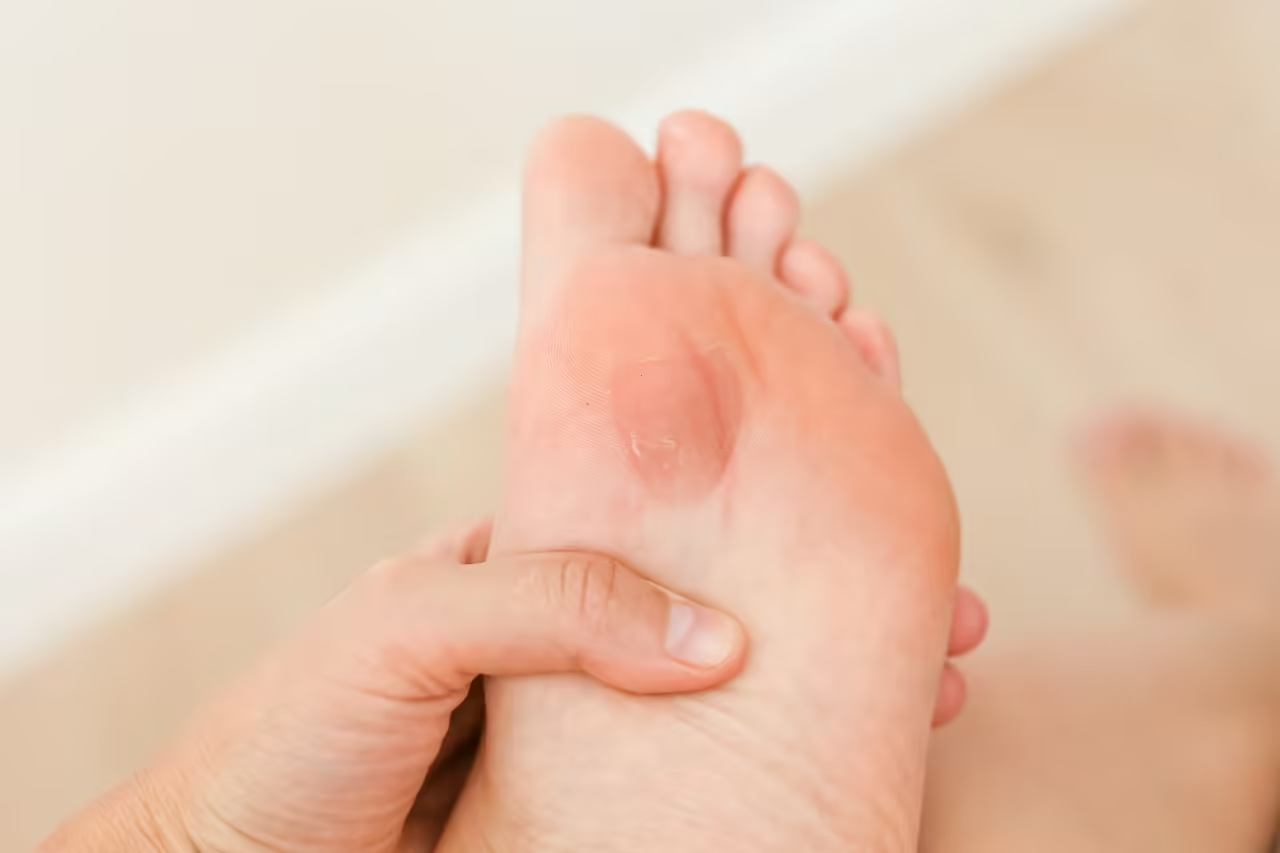
Plantar fibromatosis is a benign fibro-proliferative condition in which nodules — firm, fibrous lumps — develop within the plantar fascia, the thick band of connective tissue that runs along the sole of the foot from the heel to the base of the toes. These nodules consist of an abnormal proliferation of fibroblast cells and collagen, forming a thickening within the substance of the fascia itself.
The nodules are not cancerous and do not spread to other parts of the body. However, they can vary considerably in size — from a small pea-like firmness to larger, multi-nodular thickenings — and can cause significant pain, pressure discomfort, and anxiety. In some patients the condition is slowly progressive, with nodules gradually enlarging or new ones developing over time.
It is important to understand from the outset that plantar fibromatosis is a chronic condition. There is currently no treatment — surgical or non-surgical — that can guarantee complete and permanent eradication of the disease. The goals of treatment are to manage symptoms, improve quality of life, and where possible slow progression.
Relationship to Dupuytren's Diseas
Plantar fibromatosis is closely related to Dupuytren’s disease — a condition in which similar fibrous nodules and cords develop in the palm of the hand, causing the fingers to curl inward. Both conditions share the same underlying biology, involving abnormal fibroblast proliferation and excess collagen deposition, and are part of a broader family of fibromatoses sometimes referred to as Dupuytren’s diathesis.
Patients with Dupuytren’s disease have a significantly increased risk of also developing plantar fibromatosis, and vice versa. Other associated conditions include Peyronie’s disease (fibrosis of penile tissue) and Garrod’s knuckle pads (fibrosis over the finger joints). When two or more of these conditions are present in the same individual, it is referred to as Dupuytren’s diathesis and is associated with a more aggressive disease course.
Recognition of this relationship is important because it helps to explain the underlying biology of plantar fibromatosis, informs prognosis, and guides treatment decisions — particularly in patients with more aggressive or progressive disease.

Who Gets Plantar Fibromatosis?
Hereditary Factors
A strong family history of Dupuytren’s disease or plantar fibromatosis significantly increases risk. The condition has a notable Northern European genetic predisposition.
Age & Sex
It can present at any age including in younger adults, and unlike Dupuytren’s disease of the hand, plantar fibromatosis affects men and women more equally, though it may be slightly more common in men.
Medications
Certain medications including some anticonvulsants (notably phenytoin), beta-blockers, and long-term use of certain other drugs have been associated with an increased risk of developing fibromatosis.
Associated Conditions
Diabetes mellitus, epilepsy, liver disease, and Peyronie’s disease are all associated with a higher prevalence of plantar fibromatosis and Dupuytren’s diathesis.
Trauma & Mechanical Factors
Repeated micro-trauma to the plantar fascia — from prolonged standing, running, or previous plantar fascia injury — may act as a trigger for nodule formation in genetically predisposed individuals.
Alcohol & Lifestyle
Chronic alcohol use has been associated with Dupuytren’s diathesis broadly, though its specific role in plantar fibromatosis is less well established.
Symptoms & Natural History
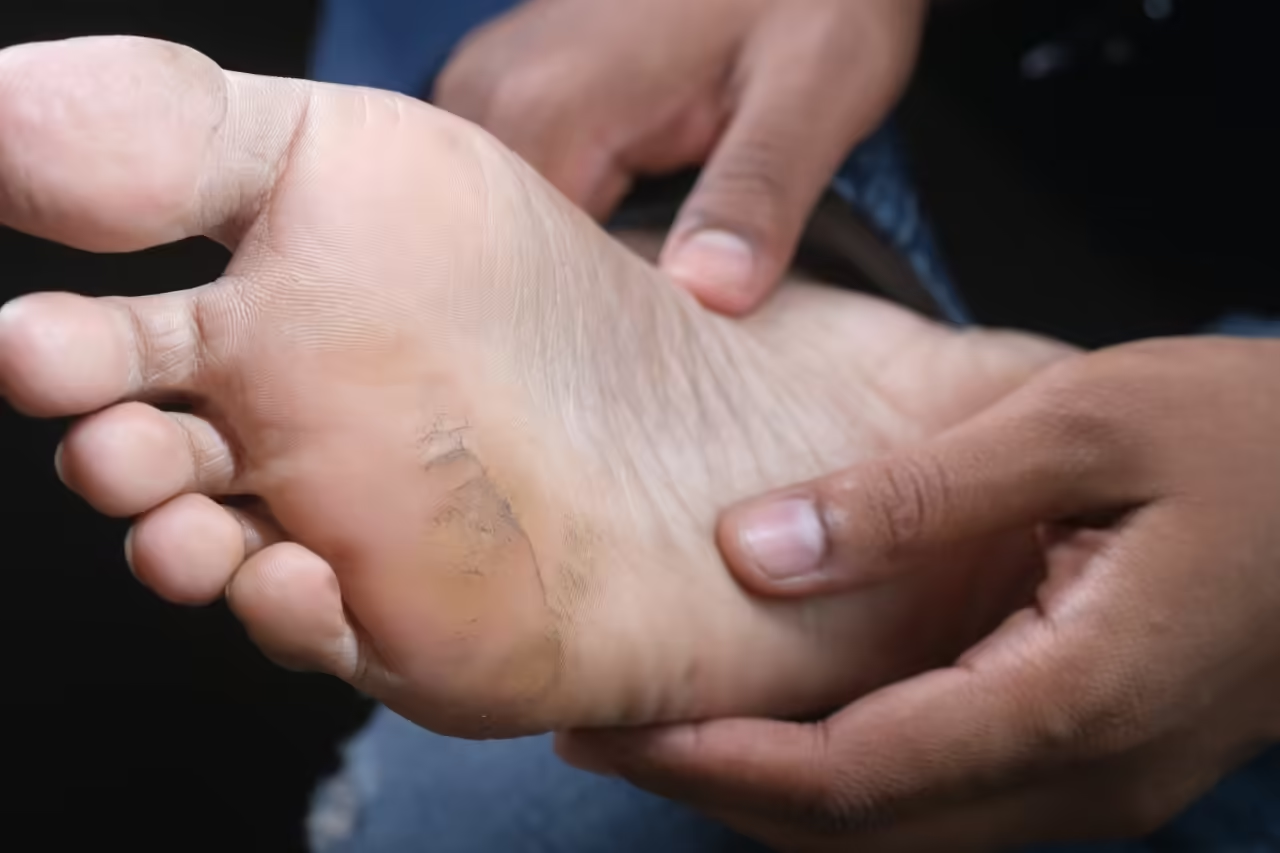
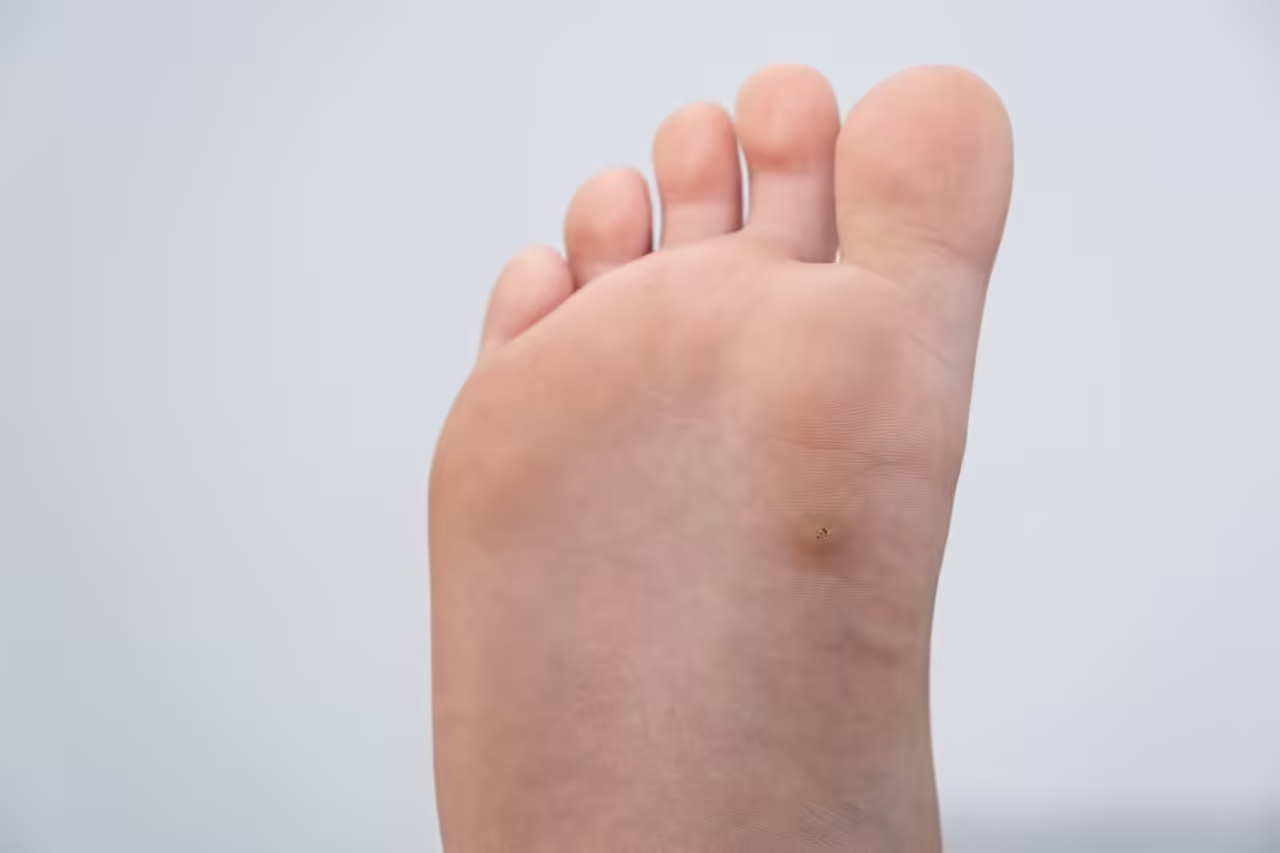
The first sign is usually the discovery of a firm nodule or thickening along the inner arch of the foot, often noticed incidentally or when walking barefoot on hard surfaces. In many patients the nodule is initially painless, causing concern mainly because of its presence and unfamiliarity. Over time — in some patients weeks to months, in others years — the nodule may become tender, particularly with direct pressure from footwear or when walking on hard ground.
The condition is typically bilateral in around 25% of cases — meaning nodules develop in both feet — though often asymmetrically. Some patients develop a single nodule that remains stable for many years; others develop multiple nodules or experience progressive enlargement. A small proportion of patients develop significant toe contractures, particularly when nodules extend towards the toes, drawing the toes into flexion in a manner directly analogous to Dupuytren’s contracture of the hand — though this is less common in plantar fibromatosis than digital contracture is in Dupuytren’s disease.
The natural history is variable and unpredictable. Not all nodules progress, and a period of active growth may be followed by prolonged stability. This variability makes treatment decisions nuanced and highly individual.
Diagnosis
Diagnosis is primarily clinical — a careful history and examination of the foot is usually sufficient to confirm the presence of plantar fibromatosis. However, ultrasound scanning is a valuable adjunct, allowing the nodule or nodules to be visualised precisely, their size and depth measured, and their relationship to surrounding structures assessed. This information is important both for monitoring progression over time and for guiding injection treatment.
MRI may be requested in atypical presentations, where the diagnosis is uncertain, where the extent of disease is unclear, or where surgical planning is being considered. It provides superior soft tissue detail and can exclude other pathology.
Biopsy is rarely necessary for diagnosis but may be required in atypical cases to exclude other conditions, including the rare possibility of a malignant soft tissue tumour — though plantar fibromatosis itself carries no risk of malignant transformation.
Treatment Options
No single treatment cures plantar fibromatosis. The aim of all treatments is to manage symptoms, improve quality of life, and in some cases influence the size or consistency of the nodule. Treatment is always tailored to the individual — the size and number of nodules, symptom severity, rate of progression, and patient preference all guide the approach.
Conservative Measures
For patients with mild symptoms, conservative measures are the first step and may be all that is required for many years. Offloading insoles or custom orthoses with a cavity or recess cut to accommodate the nodule can significantly reduce the direct pressure it experiences during walking, providing meaningful pain relief without any intervention. Footwear modification — avoiding hard, flat, or thin-soled shoes in favour of cushioned, supportive footwear — can make a substantial difference to day-to-day comfort.
Physiotherapy and stretching of the plantar fascia may help to reduce tension in the tissue around the nodule, and activity modification during periods of increased tenderness can prevent aggravation. These measures do not address the nodule itself but are an important foundation of management at all stages.
Ultrasound-Guided Corticosteroid Injection
My primary treatment
Ultrasound-guided corticosteroid injection is my primary treatment modality for plantar fibromatosis and the intervention I perform most frequently for this condition. Using real-time ultrasound imaging to guide the needle with precision into or immediately around the nodule, a carefully calculated dose of corticosteroid is delivered directly to the affected tissue.
The treatment can achieve three important goals: significant reduction in pain and tenderness around the nodule; softening of the fibrous tissue, making the nodule feel less firm and reducing the sensation of pressure underfoot; and in some cases a modest reduction in the size of the nodule over a series of injections.
Important: Corticosteroid injection does not cure plantar fibromatosis and does not eradicate the nodule. The underlying fibrous tissue remains, and whilst the nodule may soften and symptoms improve, the condition may continue to evolve over time. The number of injections that can be safely administered to any one site is limited, and I will always discuss realistic expectations with you before proceeding.
A series of injections may be planned, with response carefully monitored between treatments using clinical assessment and interval ultrasound. Many patients achieve excellent and prolonged symptom control with this approach.
Enzymatic Injection
An enzyme-based injectable treatment that directly targets and breaks down the excess collagen within the fibrous nodule.
Its use in plantar fibromatosis is off-label — meaning it is not yet formally licensed for this indication — but an emerging and promising body of evidence suggests it can be effective in reducing nodule size and improving symptoms in selected patients, particularly those with well-defined, accessible nodules. It works by enzymatically disrupting the collagen architecture of the nodule from within, leading to softening and in some cases meaningful reduction in size.
I may recommend enzyme injection in patients who have not achieved adequate relief from corticosteroid injections or use it in combination with cortciosteroid, who have significant nodule bulk, or in whom the progressive nature of the disease warrants a more targeted biological approach. The procedure is performed under ultrasound guidance and requires a period of post-injection management. It is not suitable for all patients and eligibility will be discussed at consultation.
As a national clinical adviser to the British Dupuytren’s Society with specific expertise in plantar fibromatosis, I keep closely abreast of the evolving evidence on other emerging treatments, and can advise you on the latest available options.
Radiotherapy
Low-dose radiotherapy — delivered by specialist oncology centres — is an established and effective treatment for fibromatosis of the Dupuytren’s family and has a growing evidence base specifically for plantar fibromatosis. It works by targeting the abnormally proliferating fibroblast cells responsible for nodule formation, reducing their activity and in many cases stabilising or shrinking the disease.
Radiotherapy is most effective in the earlier, more active stages of the disease when fibroblast proliferation is at its most intense, and is generally less effective once the nodules have become large and densely fibrous. It is typically delivered over a course of low-dose fractions, is very well tolerated, and the radiation dose used is specifically designed to be safe for the surrounding tissues.
I refer selected patients for radiotherapy when the condition is progressive, when nodules are active and enlarging, when conservative and injection measures have not provided adequate control, or when the disease pattern suggests a more aggressive course. Referral is made to specialist a specialist oncologist with interest in benign conditions..
Surgery
Surgical excision of plantar fibromatosis nodules is technically possible but is an option I recommend only very rarely, and only after all non-surgical approaches have been thoroughly explored and found insufficient. This cautious approach is deliberate and evidence-based — surgery for plantar fibromatosis carries significant risks that are not always fully communicated to patients.
The fundamental challenge is that plantar fibromatosis arises from within the plantar fascia itself. To achieve a complete excision, a significant portion of the plantar fascia must be removed along with the nodule — and even then, recurrence rates following surgery are high, with many patients developing further nodules in the post-operative scar tissue. The disease process is not cured by excision; it simply continues in the remaining or regenerating tissue.
Significant Surgical Risks
- High recurrence rate — nodules commonly recur in scar tissue
- Post-operative scarring on the sole of the foot can be more painful than the original nodule
- Wound healing problems in a high-pressure area
- Nerve injury causing numbness or altered sensation in the sole
- Risk of flat foot deformity if significant fascia is excised
- Prolonged and difficult recovery
When surgery may be considered
- All non-surgical options have been exhausted
- Nodule is large and causing severe functional limitation
- Significant toe contracture is developing
- Patient fully understands the recurrence risk
- Patient has stable, non-progressive disease prior to surgery
I would encourage any patient who has been offered or is considering surgery for plantar fibromatosis to seek a specialist opinion before proceeding. In my experience, many patients are offered surgery without adequate exploration of non-surgical alternatives and without a full understanding of the recurrence risk. A second opinion in this condition is always worthwhile.
Living with Plantar Fibromatosis
For many patients, the most distressing aspect of plantar fibromatosis is the uncertainty — not knowing what the lump is, whether it will grow, and what can be done about it. A clear diagnosis and a structured management plan can make an enormous difference to how patients feel about their condition, even before any treatment has begun.
It is important to emphasise that the majority of patients with plantar fibromatosis are able to maintain a good quality of life with appropriate management. Many people live for years with stable, well-controlled nodules and minimal symptoms. The condition requires monitoring rather than urgent intervention in most cases, and a watchful waiting approach combined with conservative measures is entirely appropriate for patients with mild or stable disease.
I also encourage patients to connect with the British Dupuytren’s Society, which provides excellent patient information, a supportive community of others with the condition, and up-to-date resources on both Dupuytren’s disease and plantar fibromatosis. Their website can be found at dupuytren-online.info.
Seeking A Specialist Opinion
If you have been diagnosed with plantar fibromatosis — or suspect you may have it — and are looking for expert assessment and a clear management plan, I would be very happy to see you. Given the complexity and variability of this condition, and the importance of getting treatment decisions right, a specialist consultation can make a significant difference. Both self-referral and GP referral are welcome for private appointments.